
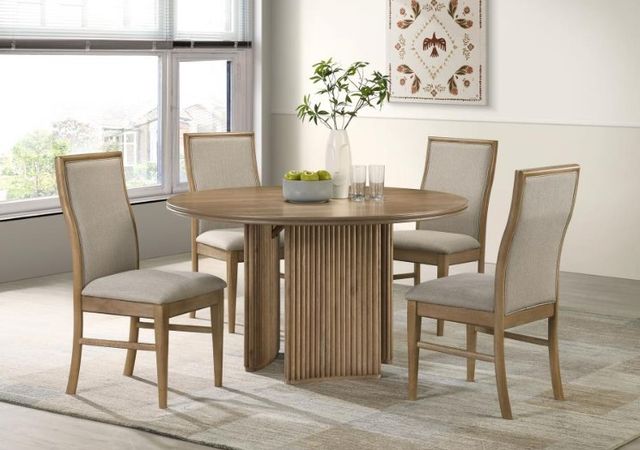
The dining table sits at an awkward angle, jammed too close to one wall so that pulling out a chair means bumping the sideboard, and during the last family gathering guests had to squeeze sideways just to reach their seats. A table that fights the room turns every meal into a shuffle and every holiday into a traffic jam. Getting the placement right transforms the same table and the same room into a space that flows, and finding the best way to position a table in a dining room is easier than it looks once you know the strategies.
Reimagine Your Dining Room at Jaron's
Get personalized layout guidance and find the right dining table for your space in our showroom. Professional delivery and local service from our team.
Explore Table in a Dining RoomAt Jaron's, we help homeowners find both the right dining table and the layout that makes it work. This guide walks through five smart placement approaches, from classic centering to corner and open-concept solutions, plus tips for narrow rooms and entertaining. Whatever your room's shape or size, you will find a strategy that improves flow, function, and the way your dining space looks and feels.
Key Takeaways
- Center for formality: A centered table with even clearance creates a classic, balanced look, ideally aligned to a window, fireplace, or light fixture.
- Corner for small spaces: Angling or tucking a table into a corner with bench seating maximizes floor space.
- Anchor open plans: Use a rug and lighting to define the dining zone within an open floor plan.
- Adapt for narrow rooms and hosting: Slim or extendable tables handle tight spaces and scale up for gatherings.
Centering a Table in a Dining Room for a Formal Layout
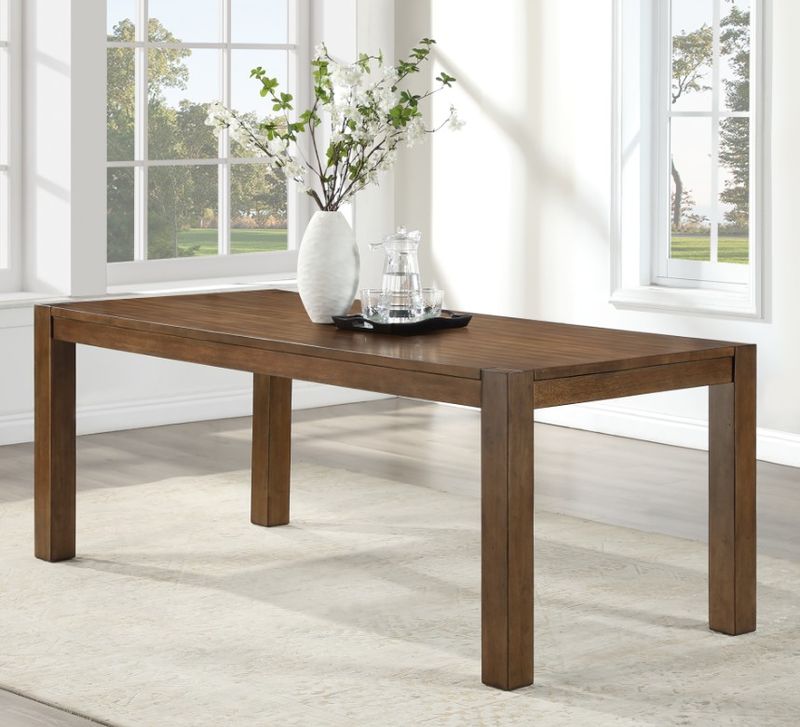
The classic approach to positioning a table in a dining room is to center it, and for a dedicated, enclosed dining room, this creates the most formal, balanced look. Placing the table in the middle of the room with even clearance on all sides gives a symmetrical, intentional feel that says the space was designed with care.
The key to comfortable centering is clearance. Aim for roughly 36 inches between the table edge and the surrounding walls or furniture, which gives enough room to pull out chairs and walk behind seated guests without squeezing. This standard clearance guideline keeps the layout functional as well as elegant.
Centering also works best when it plays off the room's features:
- Symmetry: Even spacing on all sides creates the balanced, formal look centering is prized for.
- Focal-point lighting: A chandelier or pendant centered above the table anchors the arrangement and reinforces the dining zone.
- Architectural alignment: Line the table up with a key feature rather than just the room's literal center.
Here is the nuance most placement lists skip: center the table relative to the room's architectural focal points, like a picture window, a fireplace, or a built-in, rather than strictly to the geometric center. If your chandelier is centered on a window instead of the exact middle of the room, align the table to the chandelier and window for a more intentional, harmonious look. A centered table in a dining room feels most polished when it relates to the architecture, not just the four walls, which turns a simple arrangement into a designed one.
Positioning a Dining Table in a Corner for Small Spaces

When square footage is tight, tucking a table into a corner is one of the smartest ways to position a table in a dining room. Corner placement frees up the rest of the floor for movement and other functions, making it ideal for apartments, small dining nooks, and multi-use rooms.
There are two main corner strategies:
- Angle it diagonally: Setting a table at a diagonal into a corner can create a cozy, casual look and open up walking space on the room's open side.
- Push against two walls: Placing a table against two walls and adding bench seating along the wall sides maximizes floor space and creates a snug, efficient nook.
Table shape matters a lot in corners. Round or square tables generally work better than long rectangular ones in corner setups, since they fit the corner geometry more naturally and avoid the awkward overhang a long table creates. A round table also softens the corner and makes it easier to slide in and out of seats.
Here is a space-saving idea that goes beyond basic corner tips: use bench seating along the wall side of a corner table. A bench tucks completely under the table when not in use, taking up zero extra floor space, and it adds flexible seating that can squeeze in an extra person when needed. This banquette-style approach, common in cafes and breakfast nooks, brings the same efficiency to a home dining room. For small-space dwellers, a corner table with bench seating delivers a functional dining area without sacrificing the room's open feel.
Positioning a Dining Table in an Open-Concept Living Space
Open-concept homes present a different challenge: with no walls to define the dining area, the table has to create its own sense of place. Positioning a table in a dining room that flows into the kitchen and living areas is about visually carving out a dedicated zone within the larger space.
Several strategies help define the dining area:
- Anchor with a rug: An area rug beneath the table visually grounds the dining zone and separates it from the surrounding space.
- Position between zones: Placing the table between the kitchen and living areas gives it a natural home and creates a logical flow.
- Use the table as a divider: The table itself can act as a soft room divider, marking where the dining space begins and ends.
Lighting reinforces the effect powerfully. A pendant or chandelier hung directly over the table draws the eye and defines the dining zone from above, signaling this is a distinct space even without walls.
Here is a detail most competitor articles miss, since they focus on enclosed rooms: size the rug correctly. In an open floor plan, the rug under a dining table needs to be large enough that the chairs stay on the rug even when pulled out. That usually means the rug extends at least 24 inches beyond the table edge on all sides. A too-small rug makes the zone feel flimsy and causes chairs to catch on the edge. Getting the rug size right is what makes an open-concept dining area feel deliberate and complete, and it is one of the most effective ways to position a table in a dining room that has no walls of its own.
Positioning a Dining Table Against a Wall or in a Narrow Room
Long, narrow rooms and tight-width spaces call for their own approach, and pushing a table against a wall or centering it lengthwise is often the answer. Awkward proportions do not have to mean an unusable dining area with the right placement.
Consider these narrow-room strategies:
- Push against a wall: Placing a table against one wall with a bench on that side and chairs on the other preserves walking space in a tight room.
- Center lengthwise: In a long, narrow room, centering a narrow rectangular table lengthwise follows the room's proportions and keeps the flow natural.
Table width is critical in narrow spaces. Tables under about 40 inches wide preserve walking room on either side, while a wider table can make a narrow galley-style dining room feel impassable. Choosing a slimmer profile keeps the space functional.
Here is a specific tip for tight rooms that do not want to sacrifice seating: use a narrower table shape or a drop-leaf or extendable table. A drop-leaf table stays slim for everyday use with its leaves down, then expands when you need to seat more people, adapting to a tight room without permanently giving up capacity. An extendable table does the same, letting you keep a compact footprint most of the time and scale up for gatherings. This flexibility solves the core narrow-room dilemma, giving you a workable everyday layout and the ability to host, which is one of the most practical ways to position a table in a dining room with challenging proportions.
Positioning a Dining Table for Entertaining and Large Gatherings
For households that host holidays and regular gatherings, positioning a table in a dining room means planning for more than everyday use. The layout needs to scale up gracefully when guests arrive.
Key strategies for entertaining include:
- Leave room to expand: Position the table so an extendable table has space to grow with its leaves in, without crowding the room on hosting days.
- Place near a serving surface: Positioning the table near a buffet, sideboard, or kitchen island improves the flow of serving and clearing.
- Plan clearance for extra chairs: Make sure there is room to add chairs around the table when the guest list grows.
Proximity to a serving station makes hosting dramatically smoother. When a buffet or sideboard sits within easy reach of the table, you can plate, serve, and clear without long trips across the room, keeping the meal flowing and letting you stay with your guests.
Here is the planning insight that prevents hosting-day headaches: account for the expanded table footprint in advance. Many people size their layout for the everyday table and then find it cramped when the leaves go in for a holiday. Instead, plan the room so the fully extended table still has adequate clearance around it, even if that means the everyday table looks a little generous with space. That way the layout works both for quiet weeknight dinners and for a full holiday table, without a scramble to rearrange furniture. Thinking ahead about the expanded size is what lets a dining room host with ease, and the comparison table below helps match placement strategy to your room.
How to Choose the Right Dining Table Shape for Your Room
Beyond where you place a table in a dining room, the shape of the table itself dramatically affects how well it fits your space and how comfortably it seats guests. Matching table shape to your room's dimensions and layout is a key step that works hand in hand with placement strategy.
Here is how the main table shapes suit different rooms:
- Rectangular: The most common shape, ideal for long or larger rooms and for seating more people. It fits naturally against walls and in narrow spaces when sized appropriately.
- Round: Excellent for smaller and square rooms and for corners, since it has no sharp edges and encourages conversation. Round tables make tight spaces feel less crowded and are easy to move around.
- Square: A good fit for square rooms and intimate settings, seating four comfortably while maintaining a balanced look. Larger square tables suit bigger square rooms.
- Oval: Combines the seating capacity of a rectangle with softer, rounded ends that ease traffic flow, a smart choice for rooms where corners would obstruct movement.
Room shape should guide your choice. A long, narrow room pairs best with a rectangular or oval table that follows its proportions, while a compact or square room often works better with a round or square table that fits the geometry and keeps walkways clear. The number of people you regularly seat matters too, since rectangular and oval tables generally accommodate more guests than round or square ones of similar footprint.
Thinking about shape alongside placement gives you the best result. A round table tucked into a corner, a rectangular table centered in a formal room, or an extendable oval for entertaining each solve a specific challenge. When you shop with our team, we can help you match both the shape and the placement to your exact room, so your dining table fits beautifully and functions perfectly for daily meals and gatherings alike.
Comparing Dining Table Placement Strategies by Room Type
Seeing the placement strategies side by side helps you match one to your room. The table below compares them on the factors that matter most.
| Strategy | Best-Fit Room Type | Ideal Table Shape | Space Efficiency | Clearance Needs |
|---|---|---|---|---|
| Centered | Dedicated, enclosed rooms | Rectangular or round | Moderate | About 36 inches all sides |
| Corner | Small rooms, nooks | Round or square | High | Minimal on wall sides |
| Open-concept | Open floor plans | Rectangular or oval | Moderate | Room for rug and chairs |
| Wall-adjacent / narrow | Long, narrow rooms | Narrow rectangular | High | Walking space one side |
| Entertaining | Larger hosting spaces | Extendable | Lower on hosting days | Room for expanded leaf |
Read more:
- How Long Should a Quality Queen Bed Frame Last?
- How to Choose the Perfect Wooden Dining Table for Your Home
Table in a Dining Room Placement: Advantages and Disadvantages
Choosing one dining table placement strategy over another involves trade-offs between space efficiency, formality, and flexibility. Here is the balanced view before you decide.
Pros
Improved traffic flow
The right placement keeps walking paths clear so people move around the table easily.
Better use of awkward spaces
Corner and wall-adjacent strategies make small or oddly shaped rooms usable.
Entertaining flexibility
Planning for extendable tables and serving surfaces lets a layout scale up for guests.
Stronger visual balance
Centering and rug anchoring create an intentional, polished look.
Cons
Seating limits
Some space-saving placements reduce how many people can comfortably sit.
Extra planning required
Open-concept and entertaining layouts need attention to rugs, lighting, and clearance.
Read more:
- How to Find the Perfect Farmhouse Dining Room Set
- Furniture Stores in Bordentown, NJ: Why Locals Choose Jaron's
Featured Dining Tables to Fit Your Space Perfectly
This is the one section where we recommend specific pieces. The dining sets below span sizes and seating from four to six chairs, so you can match a table to your room's placement strategy. Our showroom team can help you plan the layout.
Elements International Amherst Gray Dining Table and 4 Side Chairs
This Amherst dining set pairs a cool gray table with four coordinating side chairs, a versatile choice for smaller and medium dining rooms. The four-seat size fits centered layouts in compact rooms or works well pushed toward a wall, and the neutral gray finish suits modern and transitional decor. As a complete set, it takes the guesswork out of coordinating table and chairs. For a household that wants a stylish, right-sized dining set for a smaller room, this Elements International set is an excellent, cohesive choice that fits a variety of placement strategies.
Top Features
- Configuration: Table with four side chairs.
- Shape: Compact table for smaller rooms.
- Finish: Cool gray tone.
- Best fit: Centered or wall-adjacent in compact rooms.
Elements International Avalanche Antique White Dining Table and 4 Side Chairs
This Avalanche set brings bright antique white farmhouse charm with a table and four side chairs. The light finish opens up a small dining room and suits cottage, coastal, and modern farmhouse styles, while the four-seat size fits corner and compact layouts well. The fresh, airy look makes a tight space feel larger. For a homeowner who wants a charming, light-colored dining set that brightens a smaller room and coordinates effortlessly, this Elements International set is a lovely, practical choice that works beautifully in corner or centered placements.
Top Features
- Configuration: Table with four side chairs.
- Shape: Compact table for small rooms.
- Finish: Antique white farmhouse.
- Best fit: Corner and compact-room layouts.
Elements International Eleanor Dining Table and 4 Side Chairs
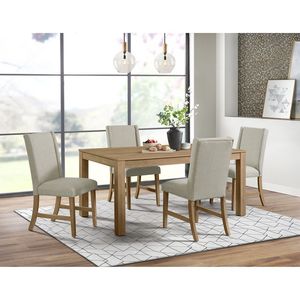
This Eleanor dining set offers classic styling with a table and four side chairs, a well-rounded option for everyday family dining. The timeless design coordinates with many decor styles, and the four-seat configuration fits medium rooms and centered or open-concept placements. As a complete, coordinated set, it simplifies furnishing a dining area. For a household that wants a versatile, classic dining set that anchors a room with understated style, this Elements International set is a dependable, attractive choice that adapts well to different placement strategies and daily use.
Top Features
- Configuration: Table with four side chairs.
- Shape: Versatile table for medium rooms.
- Finish: Classic coordinated finish.
- Best fit: Centered and open-concept layouts.
Elements International Marlene Dining Table and 4 Side Chairs
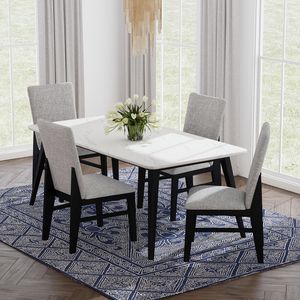
This Marlene dining set combines a stylish table with four side chairs for a coordinated look suited to modern and transitional rooms. The four-seat size works in medium and smaller spaces, fitting centered or open-concept placements, and the cohesive design makes decorating effortless. For a homeowner who wants a contemporary, complete dining set that fits a variety of room layouts with ease, this Elements International set is a smart, attractive choice that brings both style and function to the dining room while keeping placement flexible.
Top Features
- Configuration: Table with four side chairs.
- Shape: Table for medium and small rooms.
- Finish: Modern coordinated finish.
- Best fit: Centered and open-concept placements.
Elements International Transcend Charcoal Dining Table and 6 Side Chairs
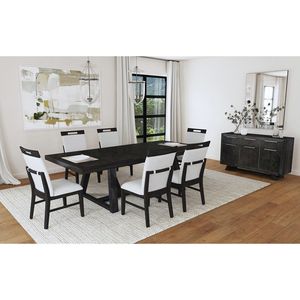
This Transcend set seats six with a bold charcoal table and six coordinating side chairs, ideal for larger rooms and households that entertain. The six-seat size suits centered placement in a dedicated dining room and provides ample seating for gatherings, while the dramatic charcoal finish makes a modern statement. For a family that hosts and wants a larger, stylish dining set to anchor a spacious room, this Elements International set is an excellent choice that combines generous seating with contemporary style, perfect for both daily meals and entertaining.
Top Features
- Configuration: Table with six side chairs.
- Shape: Larger table for spacious rooms.
- Finish: Bold charcoal.
- Best fit: Centered placement and entertaining.
New Classic Home Furnishings Phoenix Chestnut Brown Dining Table and 6 Side Chairs
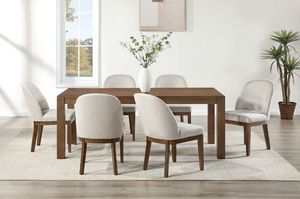
This Phoenix dining set delivers warm chestnut brown tones with a table and six side chairs, built for larger families and frequent hosts. The rich wood finish brings traditional warmth, and the six-seat size fills a dedicated dining room and accommodates gatherings comfortably. As a complete set, it coordinates table and seating effortlessly. For a household that wants a warm, generously sized dining set to anchor a larger room and host with ease, this New Classic set is a handsome, practical choice that combines ample seating with timeless, inviting style.
Top Features
- Configuration: Table with six side chairs.
- Shape: Larger table for spacious rooms.
- Finish: Warm chestnut brown.
- Best fit: Centered placement and entertaining.
Coaster Adina 5-Piece Barley Light Brown Dining Set
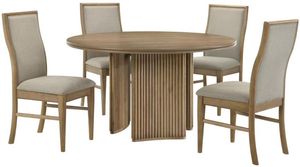
This Coaster Adina five-piece set includes a table and four chairs in a light barley brown finish, a versatile, complete option for everyday dining. The light, warm tone suits many decor styles, and the five-piece configuration fits medium and smaller rooms in centered or open-concept placements. Buying the coordinated set makes furnishing simple. For a household that wants an affordable, cohesive dining set that fits a variety of room layouts and brings warm, casual style, this Coaster set is a practical, attractive choice that covers everyday dining needs beautifully.
Top Features
- Configuration: Five-piece set with four chairs.
- Shape: Table for medium and small rooms.
- Finish: Light barley brown.
- Best fit: Centered and open-concept layouts.
Find the Perfect Table in a Dining Room Layout at Jaron's
Positioning a table in a dining room comes down to matching the placement to your room's shape, planning for proper clearance around the table, and choosing a layout that adapts when you entertain. Whether you center for formality, tuck into a corner, or anchor an open-concept zone, the right strategy makes the space flow and function beautifully.
When you are ready to reimagine your dining room, visit Jaron's. As an independent local retailer, we offer expert in-showroom layout guidance, professional delivery and setup, and local customer service that big-box competitors cannot match. Stop by the showroom for personalized layout advice, and let us help you find the perfect dining table and arrangement for your space.
Read more:
- 5 Best Ashley Furniture Recliners of 2026
- Types of Sectional Sofas for Modern Homes
- Full Size Bed Frame Sizing & Dimensions Explained
Frequently Asked Questions About Positioning a Table in a Dining Room
Leave roughly 36 inches between the dining table edge and walls or furniture, so chairs can be pulled out and people can walk behind seated guests comfortably. Tighter clearance makes the space feel cramped and hard to navigate.
In an open-concept space, position the dining table between the kitchen and living areas and anchor it with an area rug and overhead lighting. This defines the dining zone within the larger open floor plan.
Yes, a dining table can be placed in a corner to save space, especially a round or square table with bench seating along the walls. This maximizes floor space and creates a cozy, efficient dining nook.
A narrow rectangular table, ideally under 40 inches wide, works best for a narrow dining room, following the room's proportions while preserving walking space. A drop-leaf or extendable table adds flexibility for gatherings.
Yes, a dining table should generally be centered under a chandelier or pendant, which anchors the arrangement and defines the dining zone. Align the table to the light fixture and nearby architectural features for the most polished look.
Arrange a dining table for hosting by choosing an extendable table, leaving room for it to expand, and positioning it near a buffet or sideboard for serving. Plan clearance in advance so the expanded table is not cramped.
Why Trust Jarons Furniture Outlet?
Jarons Furniture Outlet has been proudly serving New Jersey families since 1992, providing quality furniture and mattresses at prices designed to fit real household budgets. As a locally owned and operated furniture retailer, Jarons understands the needs of homeowners throughout Mercer and Burlington Counties and surrounding communities. Their philosophy is simple: you don't need to spend a fortune to create a comfortable, stylish home.
What sets Jarons apart is their commitment to delivering value, selection, and personal service. Customers shopping for furniture in Bordentown, NJ will find two convenient showroom locations — including one right in Bordentown — where thoughtfully arranged room displays make it easy to envision furniture in their own homes. Whether you're furnishing a new house or refreshing a single room, the Jarons team is ready to help you find pieces that match your style, space, and budget.
Jarons is also known for its "Jaronteed" pricing promise, which focuses on providing some of the best value in the area. If customers find the same product at a lower price within a specified period, Jarons will match it — ensuring shoppers in Bordentown feel confident they're getting a competitive deal on furniture.
Inside the Bordentown showroom and online, you'll find a wide selection of living room furniture, bedroom sets, dining room collections, mattresses, and more. Their knowledgeable sales team works closely with customers to help select pieces that fit both their design vision and practical needs, while delivery and setup services make the furniture buying process in Bordentown simple and stress-free.
Shop Dinning Room Tables in Bordentown, NJ at Jarons Furniture Outlet
Looking for the perfect furniture for your Bordentown home? Visit Jarons Furniture Outlet today to explore a large collection of stylish, affordable furniture options. Whether you prefer shopping online or visiting their welcoming Bordentown showroom in person, the Jarons team is ready to help you find exactly what you need to complete your space.
With a wide selection of in-stock furniture and helpful design guidance, upgrading your Bordentown home has never been easier. Stop by their New Jersey showroom or browse their selection online to discover pieces that bring comfort, style, and value to your home.