
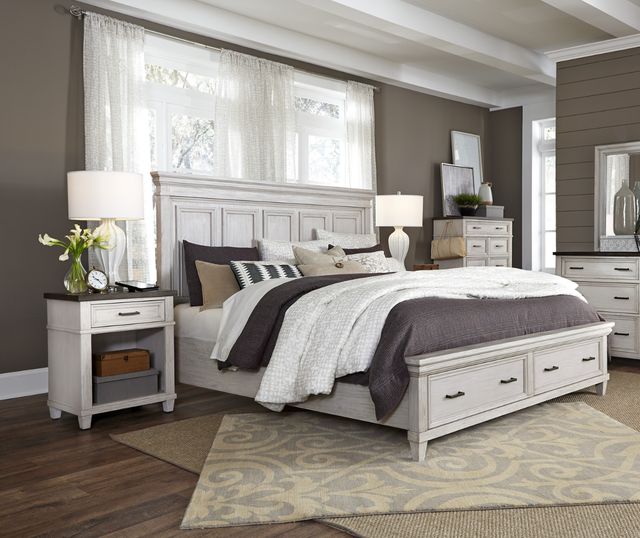
The new queen mattress spent three nights leaning against the bedroom wall, because the old frame finally gave up mid-move and the side rail split at the bracket. A tape measure sat unrolled across the carpet with a pencil and a receipt covered in scribbled numbers. Eleven browser tabs were still open, and every one of them showed different types of beds that looked perfect in a styled photo, a low platform, a curved sleigh, a storage bed with drawers running down the side. Then the measuring started, and the sleigh footboard landed four inches from the closet door.
Find the Bed Frame That Actually Fits Your Room
Our team helps southern New Jersey and Philadelphia area shoppers match bed style, size and support to the room they actually have. Shop platform, panel, storage and upholstered beds with delivery and setup, plus financing options.
Explore types of bedsThat closet-door moment is where most bed shopping stalls, and it is completely fixable with twenty minutes of measuring and a little vocabulary. At Jaron’s Furniture, we walk shoppers across southern New Jersey and the Philadelphia area through this decision every day, in showrooms where you can sit on the edge of a frame, open a storage drawer and see real height with a mattress in place. This guide covers how bed frames are actually built, all ten styles explained one by one, a side-by-side comparison table, and how to match a bed to your room size, ceiling height, storage needs and style.
Key Takeaways
- Support system matters more than looks: A platform bed holds the mattress directly on a slatted deck, a panel bed usually needs a box spring or foundation underneath, and an adjustable base changes what the frame has to accommodate. Pick the support first, then the style.
- Slat spacing decides mattress life: Slats should sit no more than about 2 to 3 inches apart for foam and hybrid mattresses. Wider gaps let the mattress sag between them, and a bunkie board bridges the difference for a lot less than a warranty claim costs.
- The frame is always bigger than the mattress: Sleigh, panel and upholstered styles add several inches on every side, so measure the assembled footprint and leave 24 to 30 inches of walking room on each accessible side.
- Storage beds buy back square footage: Drawer bases and lift-up decks turn dead space under the mattress into real storage, which can replace a dresser entirely in a small bedroom or a row-home second floor.
Understand Bed Anatomy Before You Compare Types of Beds
Every bed is the same handful of parts arranged differently, and once you can name them, all ten types of beds stop looking like a style contest and start looking like a set of trade-offs.
The headboard is the vertical panel behind your pillows. The footboard, when a bed has one, closes off the foot end and adds length to the footprint. Side rails connect the two and carry the weight. Inside those rails sit the slats, the center support rail and the legs that hold the middle of the bed off the floor.
Two more terms decide how a bed feels day to day. Deck height is how high the mattress support sits off the floor. Frame footprint is the total assembled size, which is always larger than the mattress itself.
The Three Support Systems
This is the single biggest source of confusion in bedroom furniture, and it is worth getting straight before you shop.
- A platform deck has built-in slats spaced closely enough to hold a mattress directly, with no box spring needed.
- A traditional frame supports the mattress on a box spring or a solid foundation, which sits inside the rails and adds height.
- An adjustable base is a motorized foundation that raises the head and feet, and it either sits inside the rails or replaces the deck entirely.
Slat spacing is the detail that quietly ruins mattresses. Foam and hybrid mattresses need slats no more than about 2 to 3 inches apart, because the material is flexible enough to settle into any gap wider than that. If the frame you love has wide slats, a bunkie board laid across them creates a flat surface for far less than the cost of a new mattress.
Materials and What They Signal
- Kiln-dried solid hardwood is the most durable and the most expensive, and it holds up to repeated assembly and moves.
- Engineered wood and MDF with a veneer face keeps the price accessible and looks sharp, but it does not love being taken apart more than once or twice.
- Powder-coated metal is light, slim and easy to move, which suits guest rooms and rentals.
- Rattan and cane accents add texture and warmth to an otherwise plain silhouette.
- Upholstered panels over a wood frame give you a soft headboard to lean against, with fabric quality doing most of the work.
Height Is a Daily Decision
Low-profile decks read modern and keep sight lines open in rooms with 8-foot ceilings. Taller frames make getting in and out easier, which matters more every decade, and they leave usable room for under-bed bins. Remember that the mattress adds its own thickness on top, so a 12-inch hybrid on a tall deck can land higher than you expect.
Read more:
10 Types of Beds Explained, From Platform to Adjustable
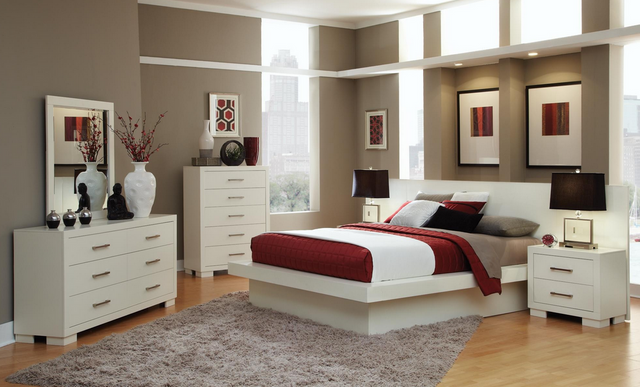
Here is the full lineup, in the order you are most likely to run into it. Each one gets what it is, who it suits and where it costs you something.
Platform Bed
A platform bed carries the mattress on a built-in slatted or solid deck inside the rails, so no box spring is required. The look is usually low, clean and modern, sometimes with a floating base.
Best for: modern and minimalist bedrooms, low ceilings, and anyone who wants to skip the cost of a foundation.
Keep in mind: the low sleep height is harder on knees and hips, and a low deck leaves little or no usable under-bed storage.
Panel Bed
A panel bed uses flat decorative panels for the headboard and often the footboard, joined by side rails. Most panel beds are designed around a box spring or foundation rather than supporting the mattress directly.
Best for: traditional and transitional bedrooms, and anyone who already owns a foundation they like.
Keep in mind: the foundation is usually an extra purchase, and it raises total sleep height by several inches.
Upholstered Bed
An upholstered bed wraps a wood frame in padded fabric, most often across the headboard and sometimes the rails and footboard too. Linen, velvet, boucle and performance fabrics are the common choices.
Best for: primary bedrooms where people read or watch television in bed and want a soft surface to lean against.
Keep in mind: fabric is not wipe-clean. In homes with kids and pets, a performance fabric with a removable, washable finish is worth the upgrade.
Sleigh Bed
A sleigh bed is defined by the curved, scrolled headboard and footboard that give it the shape of an old sled. It is a heavy, formal silhouette in wood or upholstery.
Best for: large primary suites with the floor length to carry a dramatic footboard.
Keep in mind: those curves add real inches to the footprint at both ends, so a sleigh bed eats floor length that a platform bed does not.
Storage Bed and Captain’s Bed
Storage beds split into two families. Drawer bases put two to six drawers into the side rails or footboard, while lift-up hydraulic decks raise the entire mattress platform on gas pistons to reveal one deep compartment underneath. A captain’s bed takes the idea further with a full case of drawers and cubbies built into the base.
Best for: small bedrooms, kids rooms and older homes with tiny closets.
Keep in mind: side drawers need clear pull-out room beside the bed, and a lift-up deck needs clearance above it and a mattress light enough to raise comfortably.
Canopy and Four-Poster Bed
Four posts rise from the corners of the frame. A four-poster leaves them open, while a canopy connects them across the top with a rectangular frame you can drape or leave bare.
Best for: rooms with 9-foot or taller ceilings and enough wall space to let the posts breathe.
Keep in mind: in a standard 8-foot room, tall posts crowd the ceiling and make the space feel smaller than it is.
Daybed and Trundle Bed
A daybed has a back and two sides, so it works as a sofa during the day and a twin bed at night. A trundle is a second mattress on casters that rolls out from underneath, adding a sleeping spot without adding floor space.
Best for: guest rooms that double as offices, kids rooms that host sleepovers, and finished basements.
Keep in mind: trundle mattresses are thinner by design, and you need clear floor space on one side to roll the unit out.
Bunk Bed and Loft Bed
A bunk bed stacks two sleeping surfaces in one footprint. A loft bed raises a single mattress and leaves the space underneath open for a desk, a dresser or a play area.
Best for: shared kids rooms, small apartments and vacation homes that sleep more people than they have bedrooms.
Keep in mind: check ceiling height above the top bunk, confirm guardrail requirements, and expect that changing the top sheet is a genuine chore.
Murphy Wall Bed
A Murphy wall bed folds vertically into a cabinet mounted to the wall, disappearing during the day. Many designs pair with a desk, shelving or a small sofa built into the same unit.
Best for: studio apartments, home offices and any room that has to do two jobs.
Keep in mind: it must be anchored to wall framing, which makes it a semi-permanent decision and usually a professional installation.
Adjustable Bed
An adjustable bed uses a motorized base to raise the head and foot sections independently, often adding massage, under-bed lighting and preset positions. It can sit inside many existing frames or stand on its own legs.
Best for: snoring, acid reflux, circulation issues, back pain and anyone who reads or works in bed.
Keep in mind: it needs a nearby outlet, the mattress has to be flexible enough to bend, and split king setups are the answer when two people want different positions.
10 Types of Beds Compared Side by Side
Read across the row that matches the style you are considering, then check it against your room measurements before you fall in love with a photo.
| Bed Type | Needs a Box Spring | Built-In Storage | Room Size That Fits Best | Ceiling Clearance Needed | Style Direction | Best For |
|---|---|---|---|---|---|---|
| Platform | No | Rarely, some drawer versions | Small to large | Standard 8 feet | Modern, minimalist | Skipping a foundation cost |
| Panel | Usually yes | No | Medium to large | Standard 8 feet | Traditional, transitional | Classic bedroom sets |
| Upholstered | Depends on the model | Some versions | Medium to large | Standard 8 feet | Soft, contemporary | Reading and lounging in bed |
| Sleigh | Usually yes | No | Large only | Standard 8 feet | Formal, traditional | Roomy primary suites |
| Storage and Captain’s | No on platform decks | Yes, drawers or lift-up | Small to medium | Standard 8 feet | Practical, varied | Homes with small closets |
| Canopy and Four-Poster | Often yes | No | Large only | 9 feet or more | Dramatic, romantic | High-ceiling primary rooms |
| Daybed and Trundle | No | Trundle drawer on some | Small | Standard 8 feet | Casual, flexible | Guest and multipurpose rooms |
| Bunk and Loft | No | Often stairs with drawers | Small to medium | 8 feet minimum, 9 better | Kid-friendly, compact | Shared and small bedrooms |
| Murphy Wall Bed | No | Cabinet shelving | Small | Standard 8 feet | Space-saving, built-in | Studios and home offices |
| Adjustable | No, base replaces it | No | Any | Standard 8 feet | Function first | Health and comfort needs |
The pattern is easy to read once it is laid out. Small bedrooms do best with platform, storage, Murphy and daybed designs, primary suites can carry sleigh, canopy and upholstered silhouettes, shared kids rooms belong to bunk and loft styles, and guest or multipurpose rooms are where daybeds with trundles earn their keep. Across all types of beds, the honest losers in a tight room are the ones with tall posts and deep footboards.
Measure First, Buy Once: Fitting a Bed to Your Actual Bedroom
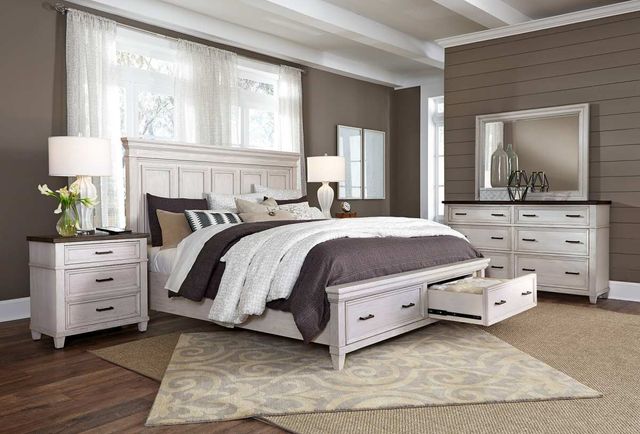
Start with the mattress numbers, because everything else builds on them. Standard sizes in inches are twin at 38 by 75, twin extra long at 38 by 80, full at 54 by 75, queen at 60 by 80, king at 76 by 80, and California king at 72 by 84.
Now add the frame. Rails, posts, curved footboards and thick upholstered panels all push the assembled footprint beyond the mattress, sometimes by six inches or more on each end. Sleigh, panel and upholstered styles are the biggest offenders.
Clearance Rules Most Articles Skip
- Leave roughly 24 to 30 inches of walking space on each side of the bed you actually use.
- Check the door swing, and check closet doors separately since they often open into the same path.
- Add the full pull-out depth of any storage drawer to the clearance on that side.
- Confirm nightstands still fit beside the headboard without blocking outlets or the walkway.
- Keep the foot of the bed clear of radiators, baseboard heat and floor vents.
Ceiling Height Changes the Answer
Standard 8-foot ceilings quietly rule out a lot of dramatic silhouettes. Tall canopy frames, four-poster designs and loft beds all need vertical room to look right and to feel safe. At 9 feet or more, those same styles finally have space to breathe, and a tall headboard reads as finished instead of crowded.
The Measuring Checklist
- 1. Room length and width, measured wall to wall at floor level.
- 2. Ceiling height, measured in the corner where the bed will sit.
- 3. Doorway width and hallway width along the delivery path.
- 4. Stairwell turns, landing depth and any low overhang.
- 5. Window sill height, radiator placement and vent locations.
- 6. Outlet locations, which decide whether an adjustable base can even be plugged in.
There is a local reality that national retailers never mention. Older twin homes and row homes across southern New Jersey and the Philadelphia area were built with narrow stairwells and tight second-floor landings, and a one-piece headboard or a fully assembled frame simply will not turn the corner. Beds that ship in multiple parts, or that arrive with a professional setup crew, are far easier to get into an upstairs bedroom.
Make Sure Your Bed and Mattress Actually Work Together
This is where the money either works for you or against you, and the box spring question sits right at the center of it.
Platform beds, storage platforms, Murphy beds, bunk and loft beds, and adjustable bases all support a mattress directly, so no box spring is required. Panel beds, sleigh beds and many traditional four-poster designs are built around a box spring or a solid foundation that sits inside the rails. Upholstered beds go both ways, so confirm before you buy.
What happens when you get it wrong is predictable. A foam or hybrid mattress on slats spaced four or five inches apart will settle into every gap, and within a year you can feel the ridges through the sleep surface. That kind of sag is a support problem, not a mattress defect.
Adjustable Base Compatibility
- Many panel and storage frames can house an adjustable base inside the rails, with the box spring removed.
- Solid platform decks usually have to come out first, and some frames cannot accept a base at all.
- Split king setups use two twin extra long bases side by side, so two people can pick different positions.
- All-foam and flexible hybrid mattresses bend well on a base, while a stiff innerspring resists the articulation and wears unevenly.
Storage Trade-Offs Worth Knowing
Side drawers are the easiest to reach but need floor clearance beside the bed. Footboard drawers keep the sides clear, which suits a bed pushed against one wall. Lift-up hydraulic decks give you the most volume by far, one large compartment instead of several small ones, though you have to clear the bed to open it. Under-bed bins are the budget option and generally need about 6 to 8 inches of clearance to slide freely.
There is one detail worth confirming in writing before you check out. Most mattress and frame warranties require adequate center support, meaning a center rail with legs reaching the floor on any queen or larger bed, and sleeping on a frame without it can void coverage on both the frame and the mattress you just paid for.
Bring these questions to the showroom and you will get a straight answer in about two minutes. How far apart are the slats. Is a foundation included or sold separately. What is the weight rating with two adults. Will this frame accept an adjustable base without modification.
Types of Beds: Pros and Cons of the Most Popular Styles
Choosing by bed type rather than by photo is what keeps a purchase from becoming a return. Every style trades something away, usually floor space, storage or budget, and knowing which trade you are making is the entire point.
Pros
A style exists for every room size and ceiling
Low platform designs suit 8-foot ceilings and tight bedrooms, while canopy and four-poster frames finally make sense in rooms with 9 feet or more overhead.
Storage designs give you square footage back
Drawer bases, captain’s beds and lift-up decks turn dead space under the mattress into usable storage, which can replace a dresser in a small room.
Platform beds save the cost of a foundation
No box spring means one less purchase, one less delivery item and a lower total sleep height in rooms where that matters.
Upholstered headboards add real comfort
A padded headboard is far kinder to your back and neck for reading or watching television than a hard wood panel is.
Adjustable bases address health, not just comfort
Raising the head helps with snoring and acid reflux, and raising the feet takes pressure off the lower back and helps circulation.
Trundle, bunk and Murphy designs solve people problems
They add sleeping spots without adding bedrooms, which is exactly what guest rooms, shared kids rooms and studio apartments need.
Cons
Decorative footboards and posts eat the room
Sleigh curves, deep footboards and tall posts consume floor length and visual space, and they make a small bedroom feel tighter. The workaround is choosing a footboard-free platform or panel design and putting the drama in the headboard instead.
Heavier and mechanical styles are harder to live with
Solid wood storage beds, Murphy cabinets and adjustable bases are heavy to move, slower to assemble and more work to clean around. The workaround is professional delivery and setup, plus felt pads or a slim vacuum attachment for the space underneath.
Read more:
- Innerspring Mattress Buying Guide: Coil Count, Comfort & More
- 5 Best Ashley Furniture Recliners of 2026
Pick a Bed You Will Still Love in Ten Years
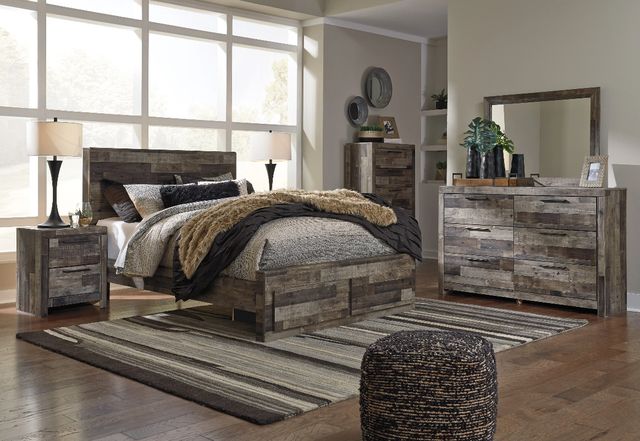
Style vocabulary makes shopping faster, because the frame shape and the finish do most of the talking.
- Modern and minimalist: low platform frames, straight lines, matte black or pale wood.
- Transitional: clean panel beds with soft edges in mid-brown or painted finishes.
- Coastal: light oak, whitewash, cane and rattan detailing.
- Farmhouse: plank headboards, aged ivory and weathered gray finishes.
- Industrial: powder-coated metal frames with dark wood accents.
- Mid-century: tapered legs, walnut tones and a low headboard profile.
- Traditional: mahogany and cherry, raised panels and turned posts.
Finishes That Survive Real Life
Light oak and walnut tones hide dust and small scratches better than high-gloss anything. Painted white looks crisp but shows scuffs at the footboard, which is where shoes and vacuum cleaners hit. Painted black hides scratches poorly but hides dust well, so it suits a low-traffic primary bedroom. On upholstery, mid-tone performance fabrics beat cream boucle in any home with kids or pets, and a removable washable cover is worth more than any fabric name on the tag.
Headboard Scale and Proportion
Headboard height should relate to the wall behind it. A tall upholstered or canopy silhouette makes a room with high ceilings feel finished, and makes an 8-foot room feel crowded. If there is a window behind the bed, keep the headboard below the sill or accept that you are covering glass. Leave enough wall above the headboard for art without the two fighting, roughly a hand’s width or more of breathing room.
Sets Versus Mixing
A coordinated bedroom set with matching nightstands, dresser and mirror is the fastest way to a finished room, and it removes the guesswork of matching a finish across brands. Mixing finishes looks more collected, but it works best when you repeat each tone at least twice, the same way you would in a living room. If the room is small and you want it done in one decision, buy the set.
What Changes With Budget
- Entry level: engineered wood with veneer, basic roller drawer glides, fewer slats and simpler joinery.
- Mid range: better veneers or mixed solid wood, smoother glides, more slats and stronger center support.
- Premium: kiln-dried solid hardwood, dovetail drawer construction, full-extension glides and heavier hardware.
Financing matters here in a practical way. Spreading the cost over months often moves a shopper from an entry-level frame to a mid-range one that will survive two moves instead of one, without changing what the month actually feels like.
Common Bed Buying Mistakes and a Pre-Purchase Checklist
The same handful of errors show up over and over, and every one of them is avoidable with a tape measure and two questions.
- Measuring only the mattress and never the assembled frame footprint.
- Forgetting the stairwell, the hallway turn and the doorway on the delivery path.
- Buying a very low platform when mobility is already a concern.
- Pairing a foam mattress with slats spaced too far apart.
- Ignoring a box spring requirement or skipping center support legs.
- Choosing a canopy, four-poster or loft design without checking ceiling height.
Confirm These Before You Check Out
- 1. Total assembled dimensions, including headboard height and footboard depth.
- 2. Whether a foundation is included, required or sold separately.
- 3. Weight capacity with two adults and a mattress.
- 4. Hardware, slat count and slat spacing.
- 5. Warranty terms and what voids them.
- 6. Lead time on special-order finishes and fabrics.
Delivery is where online-only purchases fall apart. Professional delivery and setup should include a scheduled window, in-room placement, full assembly, packaging removal and a quick walkthrough before the crew leaves, rather than a heavy carton left in the driveway. Run this checklist against any of the ten types of beds and it works the same way every time.
Nothing beats testing in person. Sit on the edge and feel the height under your knees, press the headboard to see whether it flexes, open and close a storage drawer, cycle an adjustable base through its positions, and look at the real frame height with a mattress on it rather than a floor sample without one.
The Sit-to-Stand Height Test That Decides How a Bed Feels Every Day
Everybody measures room length and nobody measures bed height, which is strange because height is what you feel twice a day for the next decade. The number that matters is the total distance from the floor to the top of the mattress, not the deck height printed on a spec sheet. Sit on the edge with your feet flat. If your knees land at roughly 90 degrees and your thighs sit level, that bed is right for your body, and for most adults that total lands somewhere around 22 to 26 inches. The math is simple once you know it: deck height plus mattress thickness equals sleep height. A 7-inch platform deck under an 8-inch mattress gives you 15 inches, which is a low, modern look that is hard on knees. A 14-inch storage deck under a 13-inch hybrid puts you at 27 inches, which is easy to get out of but a climb for a shorter sleeper.
- Measure your current bed from the floor to the top of the mattress and note whether it feels too high, too low or right.
- Ask for the deck height of any frame you like, then add the thickness of the mattress you plan to use.
- Remember that a box spring adds 5 to 9 inches, so a panel bed with a standard foundation sits noticeably higher than a platform.
- If mobility is a factor, aim toward the taller end of the range and skip low-profile platform designs.
- If the ceiling is 8 feet and the headboard is tall, a lower deck keeps the whole silhouette from crowding the wall.
- Bring the number with you when you shop, because deck height is the one spec that is easy to check in person and easy to miss online.
Read more:
- Furniture Stores in Bordentown, NJ: Why Locals Choose Jaron's
- Types of Sectional Sofas for Modern Homes
Shop Popular Types of Beds at Jaron’s Furniture
The lineup below covers the decisions this article just walked through: storage capacity, platform support versus a foundation, finish direction and whether you want the bed alone or the whole room handled at once. Four of these are storage designs that differ in size, drawer approach and finish, one is a true platform bed, and one is a classic panel silhouette. Every one comes with delivery and setup, financing options, and a showroom where you can check real height with a mattress in place.
Benchcraft Derekson Multi Gray King Storage Panel Bed with 2-Drawer Storage
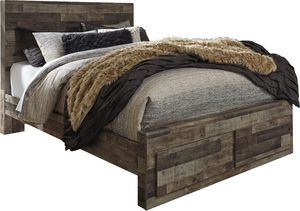
A king bed already claims most of the floor in a standard bedroom, which usually leaves no wall long enough for a second dresser. This one answers that by building two drawers into the base, turning the dead space under the mattress into real storage instead of a place for bins. The multi gray finish carries the weathered farmhouse look without reading rustic, so it sits comfortably with white trim and warm wood floors. Remember the clearance rule from earlier and leave pull-out room on the drawer side before you commit to a layout.
Top Features
- Two built-in storage drawers: Recovers the space under a king mattress, which is exactly the square footage a small bedroom cannot spare.
- King size footprint: Full-size comfort for two adults, best in a room with 24 to 30 inches of walking space on each side.
- Multi gray weathered finish: A farmhouse-leaning tone that hides everyday dust and small scuffs better than a high-gloss finish.
- Panel bed silhouette: Classic flat panel styling that pairs easily with existing bedroom furniture instead of demanding a matched set.
Caraway Aged Ivory Queen Storage Bed, Dresser and Mirror
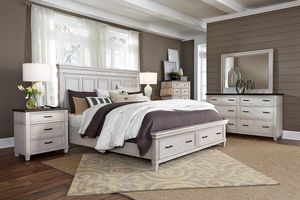
Furnishing a whole bedroom one piece at a time is how finishes end up almost matching. This three-piece package solves that in a single decision, pairing the Caraway queen storage bed with a coordinating dresser and mirror in the same aged ivory finish. That is the set-versus-mixing question from earlier, answered in favor of the set. The storage bed handles linens and off-season clothing underneath while the dresser covers daily items, which is a practical combination for a primary bedroom with one modest closet.
Top Features
- Three coordinated pieces: Bed, dresser and mirror arrive in one matched aged ivory finish, so nothing is close but not quite right.
- Queen storage bed: Built-in under-bed storage that works alongside the dresser rather than duplicating it.
- Aged ivory finish: A soft painted tone that suits coastal, farmhouse and transitional bedrooms without locking the room into one look.
- Complete room in one decision: The fastest path to a finished bedroom, with a single delivery and setup appointment instead of three.
Coaster Jessica White Queen Platform Bed
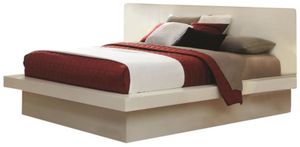
This is the platform bed the article kept pointing to, the one that supports a mattress directly and takes a box spring off the shopping list entirely. That saves a purchase, a delivery item and several inches of sleep height, which is the right combination for a room with 8-foot ceilings or a modern, low-profile look. The white finish keeps a small bedroom feeling open and bounces available light rather than absorbing it. Pair it with a foam or hybrid mattress and confirm the slat spacing suits it.
Top Features
- True platform support: Holds the mattress directly, so no box spring or foundation purchase is required.
- Lower sleep height: A clean modern profile that keeps sight lines open in rooms with standard 8-foot ceilings.
- White finish: Reflects light and visually opens a smaller bedroom, apartment or guest room.
- Queen size: The most common size in American bedrooms, at 60 by 80 inches of mattress plus the frame around it.
Aspenhome Caraway Aged Ivory Queen Storage Panel Bed
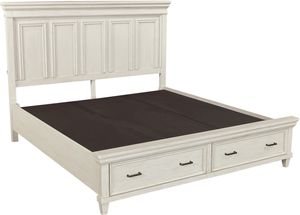
Plenty of shoppers already own a dresser they like and only need the bed replaced. This is the same Caraway collection and the same aged ivory finish as the package above, offered as the storage panel bed on its own. You get the built-in under-bed storage and the panel silhouette without paying for case pieces you do not need, and you can still add the matching dresser later if the room calls for it. It is a natural fit for a queen bedroom where closet space is the real problem.
Top Features
- Storage bed sold on its own: The right choice when the dresser and mirror in the room are already working.
- Built-in under-bed storage: Recovers space for linens, blankets and off-season clothing in a room with limited closet depth.
- Aged ivory Caraway finish: Identical to the three-piece package, so the collection can be added to over time.
- Queen panel silhouette: Flat panel styling that reads transitional and coastal rather than heavily traditional.
Elements International Brunswick Mahogany King Panel Bed
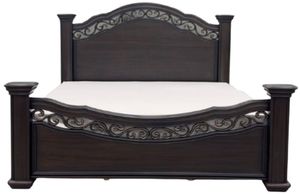
Some bedrooms want warmth and weight rather than a pale modern look, and that is exactly what a deep mahogany finish delivers. This king panel bed is the classic traditional silhouette from earlier in the article, flat decorative panels front and back with no curves stealing floor length the way a sleigh design would. Rich wood tones hide scratches and daily wear far better than painted white, which makes them a sensible pick for a busy household. Confirm the foundation requirement before delivery day, since most panel beds are built around one.
Top Features
- Mahogany finish: A deep traditional wood tone that hides scuffs and dust better than any painted or high-gloss surface.
- King size panel design: Generous width for two sleepers without the extra footprint length a sleigh footboard adds.
- Classic panel styling: Flat headboard and footboard panels that suit traditional and transitional bedrooms equally.
- Foundation-based support: Designed around a box spring or foundation, so plan for that piece and the added sleep height.
Elements International Ridgemont Storage Panel Bed
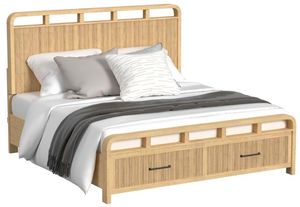
Older homes across the region were built with closets that would embarrass a modern apartment, and that is the exact problem this bed was designed around. The Ridgemont pairs a panel bed silhouette with built-in storage in the base, so the bedroom gains capacity without gaining furniture. Storage beds like this one can genuinely replace a dresser in a tight second-floor bedroom, which is the point made in the storage section earlier. Check available sizes and finish options with our team so the frame matches the mattress you already own.
Top Features
- Built-in base storage: Adds capacity in bedrooms where the closet is the limiting factor, without adding another piece of furniture.
- Panel bed styling: Flat panels keep the look clean and the footprint tighter than curved or posted designs.
- Dresser-replacing capacity: In a small room, a storage bed can carry the load a dresser normally would.
- Sizes and finishes to confirm: Our showroom team can walk you through the options and match the frame to your current mattress.
Compare Types of Beds in Person and Bring the Right One Home
Match the style to your room dimensions and ceiling height first, then confirm the support system your mattress actually needs, and finally decide how much storage you want the bed itself to carry. Those three answers narrow ten options down to two or three very quickly. Everything after that is finish and budget.
Come see the difference at Jaron’s Furniture. Our showroom staff will walk you through frame construction, slat spacing and mattress pairing in person, which beats guessing from a product photo, and you can sit on the edge of every frame before you decide. Bring your room measurements and your ceiling height, browse the bedroom collections, and ask about delivery, setup and financing while you are there. Local delivery crews know the narrow stairwells and tight landings in southern New Jersey and Philadelphia area homes, and when you have a question next year, you reach people down the road instead of a national call center. That is the difference between buying types of beds online and buying one from neighbors.
Frequently Asked Questions about Types of Beds
The most common types of beds are platform, panel, upholstered, sleigh, storage and captain’s, canopy and four-poster, daybed and trundle, bunk and loft, Murphy wall beds, and adjustable beds. Platform, panel and storage beds account for the majority of bedroom sales because they fit standard room sizes and 8-foot ceilings.
A platform bed supports the mattress directly on a built-in slatted or solid deck, while a panel bed uses flat decorative panels and usually requires a box spring or foundation underneath. That difference changes both your total cost and your final sleep height by several inches.
No, platform beds, storage platforms, bunk and loft beds, Murphy beds and adjustable bases all support a mattress directly without a box spring. Panel beds, sleigh beds and many traditional four-poster designs are built around a foundation, so check the product specifications before ordering.
Platform beds, storage beds, daybeds with trundles and Murphy wall beds are the best choices for a small bedroom because they keep the footprint tight or recover space under the mattress. Skip sleigh, canopy and four-poster designs, since footboard curves and tall posts make a small room feel tighter than it is.
An adjustable bed is generally the best choice for back pain because raising the head and feet takes pressure off the lower spine and supports the natural curve of the back. Pair it with an all-foam or flexible hybrid mattress, since a stiff innerspring resists the articulation and wears unevenly.
No, the mattress has to match both the frame size and its support system, including slat spacing of about 2 to 3 inches for foam and hybrid models. Frames without adequate center support or with widely spaced slats can cause sagging and may void the mattress warranty.
Why Trust Jarons Furniture Outlet?
Jarons Furniture Outlet has been proudly serving New Jersey families since 1992, providing quality furniture and mattresses at prices designed to fit real household budgets. As a locally owned and operated furniture retailer, Jarons understands the needs of homeowners throughout Mercer and Burlington Counties and surrounding communities. Their philosophy is simple: you don't need to spend a fortune to create a comfortable, stylish home.
What sets Jarons apart is their commitment to delivering value, selection, and personal service. Customers shopping for furniture in Bordentown, NJ will find two convenient showroom locations — including one right in Bordentown — where thoughtfully arranged room displays make it easy to envision furniture in their own homes. Whether you're furnishing a new house or refreshing a single room, the Jarons team is ready to help you find pieces that match your style, space, and budget.
Jarons is also known for its "Jaronteed" pricing promise, which focuses on providing some of the best value in the area. If customers find the same product at a lower price within a specified period, Jarons will match it — ensuring shoppers in Bordentown feel confident they're getting a competitive deal on furniture.
Inside the Bordentown showroom and online, you'll find a wide selection of living room furniture, bedroom sets, dining room collections, mattresses, and more. Their knowledgeable sales team works closely with customers to help select pieces that fit both their design vision and practical needs, while delivery and setup services make the furniture buying process in Bordentown simple and stress-free.
Shop Beds in Bordentown, NJ at Jarons Furniture Outlet
Looking for the perfect furniture for your Bordentown home? Visit Jarons Furniture Outlet today to explore a large collection of stylish, affordable furniture options. Whether you prefer shopping online or visiting their welcoming Bordentown showroom in person, the Jarons team is ready to help you find exactly what you need to complete your space.
With a wide selection of in-stock furniture and helpful design guidance, upgrading your Bordentown home has never been easier. Stop by their New Jersey showroom or browse their selection online to discover pieces that bring comfort, style, and value to your home.